🍅 Update — 29 September 2026: Growers Weigh Not Planting in 2027
Three weeks on, the season's outcome is clearer and the consequences have moved from the field to next year's contracts. Cooperativas Agro-alimentarias Extremadura reports that the region's industrial tomato harvest finished around 11% below the contracted volume, after the June–July heat damaged flowering and fruit development and reduced both quantity and quality. Quality penalties meant many growers were paid below the contracted price, which the cooperatives say does not cover production costs — the second consecutive loss-making campaign for Extremadura's tomato growers.
The spirotetramat gap described below is unchanged: the active ingredient lost its EU authorisation, Spain's grace period ended in October 2025, and other member states have used temporary emergency authorisations while the Spanish Ministry of Agriculture has not granted one. Growers also consider the current agricultural insurance system inadequate for extreme-heat episodes.
The cooperatives are now preparing a study of real 2026 production costs to take into the 2027 contract negotiations, and have been explicit about the outcome: if the contract does not allow profitable production, they will recommend that members do not sow tomato in 2027. "The sector cannot afford a third consecutive campaign working below cost," said Juan Francisco Blanco, who chairs the organisation's industrial tomato working group.
What it means for buyers: the 2027 Spanish crop is now a contracting question before it is a weather question. Extremadura supplies close to three-quarters of Spain's processing tomato, and the winter contract round will decide how much of it is planted. Buyers with Spanish paste, passata or sauce programmes should follow that negotiation from December onward and — as noted at the start of this season — have a qualified second origin in place before it is needed rather than after.
What Is Happening in Extremadura
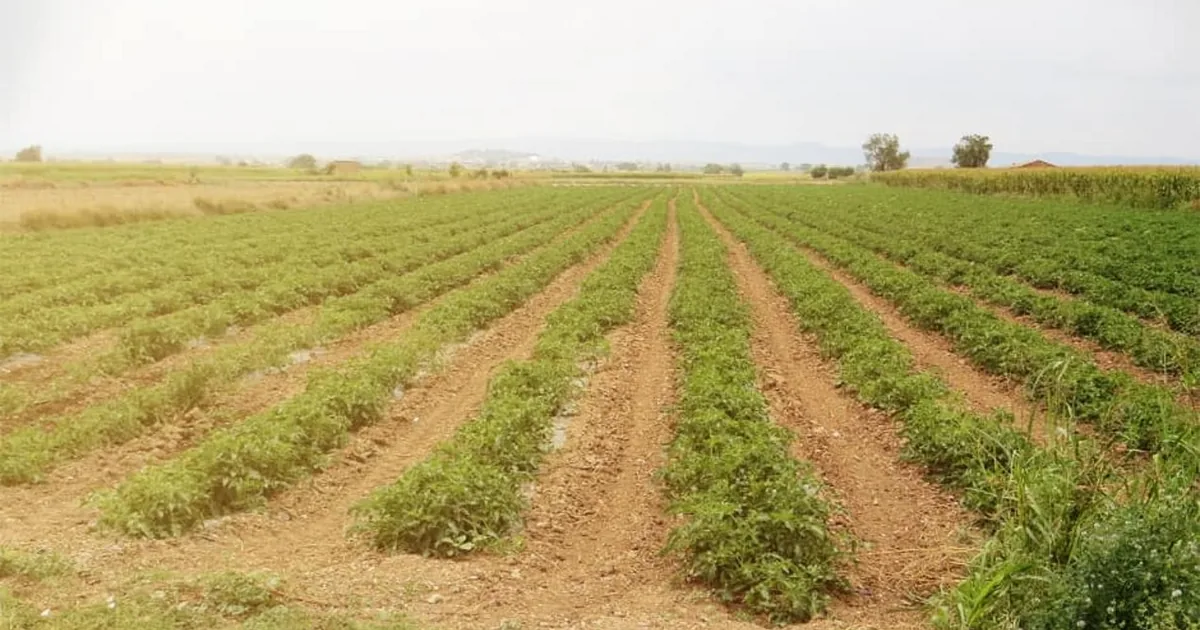
Extremadura grows roughly 20,700 hectares of processing tomato and produces close to three-quarters of Spain's national crop. This season, sustained high temperatures and low humidity have driven a massive outbreak of the tomato russet mite — known locally as Vasates. The mite is microscopic, feeds on plant cells, and dries the vine out before the fruit reaches optimum maturity.
The consequences are already visible in the field:
- Projected yield losses of up to 30% across affected area, with cooperatives in the worst-hit zones such as Vegas del Guadiana anticipating real losses of 25–30%.
- At least a 10% reduction in expected regional production on conservative estimates, with factory data still being finalised.
- Forced early harvest — in severely infested fields growers have had to cut 10 to 15 days ahead of the natural cycle because the plants dried out first.
- Early crops largely escaped; mid-season and late crops took the damage, as peak pest pressure collided with the summer heat.
This sits on top of a season Extremadura growers were already calling difficult. Continuous heatwaves since May caused flower abortion and production loss, and the grower association in Villanueva de La Serena has warned publicly that yields may end up among the lowest in the crop's history — against a contracted price of €107 per tonne agreed back in February, before any of this was known.
The Regulatory Root: Banned in Spain, Allowed in Italy and Portugal
Climate created the conditions, but the industry is clear that the severity comes from a regulatory change. Growers previously controlled the mite with a single application of Movento, a spirotetramat-based insecticide. That product has been prohibited, and the Spanish Ministry of Agriculture has refused to re-authorise the active ingredient.
The knock-on effects run wider than the mite itself. According to CONESA's Agronomy Manager, the ban has also "favoured the resurgence of pests that had previously been well controlled and had very little impact on the crop, such as green aphids and whitefly."
The industry association AGRUCON has been blunt about the competitive position it creates, calling it "highly disappointing and hard to understand that the Spanish administration has not authorized the use of the only product that allows effective control of mites in tomato, whereas main EU competitor countries, such as Italy and Portugal, have indeed authorized it."
The Cost Side: Three Treatments Instead of One
Replacing one effective pass with several ineffective ones has inverted the crop protection budget. The comparison growers are living with:
| Programme | Applications | Cost per Hectare | Result |
|---|---|---|---|
| Movento (previously) | 1 pass | €70–80 total | Effective single-application control |
| Authorised alternatives | At least 3 treatments | €100–170 each | Low efficacy, very limited persistence |
| Sulfur dusting | Multiple passes | €30 per pass | Supplementary only |
In CONESA's words, producers are carrying out "many more treatments with products that have low efficacy and very limited persistence, while at the same time involving a very high economic cost." A grower who spent €70–80 per hectare last season can now be spending several times that and still lose a quarter of the crop.
What It Means for the European Paste Balance
Spain's national forecast had already been revised down to a maximum of 2.6 million tonnes, with the industry saying openly it may finish lower. The mite outbreak explains a large part of why. Two consequences follow for buyers:
The shortfall sits in the mid and late crop, which is exactly the fruit that fills the back end of a contract. A programme that looked comfortably covered in February is now being fulfilled from a crop that may deliver 10% less regionally. This is worth an early conversation with your Spanish supplier rather than a late surprise — most processors are managing this openly, and they will tell you where they stand if asked in September rather than December.
The cost pressure is falling on the growers, not the market. Global raw material has declined for a third year, yet Extremadura growers are absorbing multiplied crop protection costs against a €107 per tonne contract signed before the outbreak. That combination is not sustainable for the people farming it, and it is the kind of pressure that tends to surface in the following season's contract negotiations rather than this one's.
The regulatory gap is the part worth following. Italy and Portugal still authorise the active ingredient. If the Spanish position does not change, this stops being a one-season event and becomes a recurring cost for growers in one of Europe's largest origins whenever a hot, dry summer arrives. A resolution in Madrid would matter more to the 2027 crop than anything the weather does.
Egypt's Position
Egypt's 2026 campaign has its own pressures — summer acreage is down roughly 5–7% as growers responded to higher fertilisation, crop protection and energy costs, and average Brix is around 4.9, in line with the wider Mediterranean. Revised area and volume figures were due in the first days of September.
The Egyptian crop is not facing this particular problem: there is no Vasates outbreak, no forced early harvest, and the control products remain available. Egypt's reduction is a planned grower response to input costs, known before the season started, rather than an in-season loss. That is a difference in the type of risk, not a claim that one crop is better farmed than another — Extremadura's growers are dealing with a tool being taken away mid-cycle, which no amount of good agronomy fully compensates for.
The practical relevance for buyers is dual sourcing. Egypt crops in both winter and summer, covering the window when Northern Hemisphere factories are shut, and Mediterranean sailings to European, UK and North American ports keep lead times comparable. Qualifying a second origin is a slow process best started in a calm market — and that is true as a general principle of sourcing, in any season, whichever origins you use.
🍅 Key Takeaway for Tomato Product Buyers
Extremadura is facing yield losses of up to 30% in the worst-affected areas from a pest it no longer has an effective tool against — a regulatory outcome its growers did not choose. If your paste, passata or sauce programme draws on Spanish supply, talk to your processor early about coverage from this crop. And whichever origins you buy from, this season is a reminder that a qualified second source is best arranged before you need it.
Saporina's Tomato Products
Saporina's Egyptian tomato range draws on both the winter and summer seasons (sun-dried in winter only), offering year-round supply of paste, passata, pizza sauce, whole peeled, diced, powder and ketchup. Available in aseptic bulk, A10 and A12 cans, retail formats and private label packaging, with full export documentation for EU, UK, North American and Gulf destinations.
📩 Talk to Us About 2026/27 Supply
Contact Saporina to discuss Egyptian tomato supply — paste, passata, pizza sauce, whole peeled, diced, powder, sun-dried and ketchup in industrial, HORECA, retail and private-label formats. Samples and specifications available on request.